
.svg)
.svg)
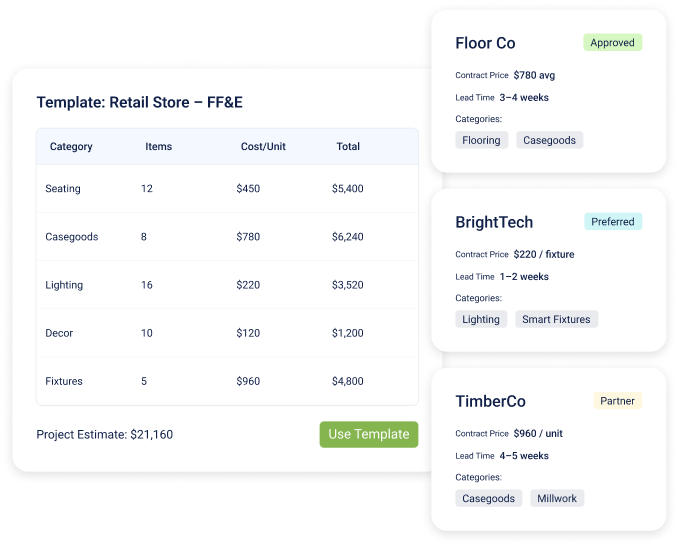
Roll out stores faster while keeping your stores up to date with brand-approved FF&E, OS&E, and finishes.



“So there was this huge disconnect between what was being specified and what was purchased and implemented in stores. Now that all of our teams are using Fohlio, we’ve been able to centralize all the workflow and data assigned to each project. So now we have a constant stream of live updates. If a design change occurs, everyone immediately has access to it and is aware of what they need to do to make that happen. Whereas before, not only were people not getting this information, they also weren’t going back to the central team to let us know if they had already placed an order for something, and so the design change is not recommended.”


.svg)
.svg)


.webp)
.webp)
.webp)
.webp)
.webp)
.webp)
.webp)
.webp)
.webp)

